India is extremely rich in traditional cultural art forms that have centuries old history and tradition. Folk music is integral to the lifestyle and living of the artists. Realizing the overarching potential of music in bringing about social, economic, cultural empowerment of indigenous communities, as well as inclusive growth, banglanatak dot com has been working with music as a driver of sustainable development. Banglanatak started working with music as part of its 'Art for Life' programme that commenced as a pilot project in 2005, and have evolved into a proven model demonstrating how culture can be used as a resource for pro-poor growth, and sustainable development of rural traditional artists, and build resilient communities. Banglanatak has organized its activities, outputs and outcomes in terms economic, social and cultural impacts, along with its vision for 'Music and Development' through its division of MusiCal - an initiative to foster music entrepreneurship, social well-being, universal values and human rights based on the principle that music is a cornerstone of universal development.

West Bengal in eastern part of India is very rich in its diverse genres of folk music integral to the lifestyles of many traditional rural communities. Among them are Baul-Fakiri, Bhawaiya, Bhatiyali, Jhumur. Though these music have been popularised by renowned singers and musicians through the entertainment industry, the economic and social returns from the musical products have not benefitted the traditional practitioners directly. To address the challenges, banglanatak undertook a multi-pronged approach aiming to revive and revitalize musical traditions of rural Bengal.

In addition to the inherent quality of music, singers and instrumentalists, a range of allied skills are required to make a mark in the highly competitive world music industry. Banglanatak undertook not only a behavioural intervention but also an international festival-oriented training intervention with flexibility keeping the nature and lifestyle in mind using various methods including showing videos of their master singers at international platforms and interactions of other stalwarts with global players.

The capacitated folk artists were directly linked to festivals, events, networks, etc. to open up multiple avenues of local, national and international market opportunities. The process facilitated not only professional performances but also exposure, knowledge exchange, understanding different types of audiences and different formats of presentations, etc. It also inspired aspiration among the previously marginalized singers and musicians, especially the youth, to undertake their traditional folk music as a professional career option. https://youtu.be/k04j_OqitmE
To create international opportunity, banglanatak promoted these art forms at different international platforms through participation in festivals and events, and creating its own international festival and collaboration spaces. Since 2014 these musical forms have been promoted at WOMEX with a dedicated business stand for linkages with various music industry stakeholders and actors.


Folk music of different genres represent a rich storehouse of folk stories, diverse melodies, themes, song structures, instruments, and community practices that add to the intrinsic value of such music. However, either such knowledge is not documented or is held with specialized institutions engaged in research or archiving. Owing to lack of public knowledge of these music genres, and about the original artists, there is rampant commercial exploitation of these musicians and their creativity by the organized entertainment industry.
Today's globalized world brings the advantage of digital connectivity and its immense potential to expand outreach across borders, promote musical products and their creators, and establish direct linkages and interaction with audiences, fellow musicians, industry stakeholders, etc. However, there are also challenges of remoteness of the rural singers and a huge digital divide that jeopardizes their growth. Banglanatak has systematically developed and archived digital information about these folk music genres, their artists, cultures, histories, etc., which are freely accessible online. https://youtu.be/8EmDHxKeqDw
Cultural tourism is widely accepted as an immensely potential industry to alleviate poverty, reduce migration and generate equitable growth for the local artist communities. Looking at the potential of cultural tourism as a major driver of grassroots economic, cultural and social development, banglanatak in 2009 started a new vertical of community-led cultural tourism within the larger framework of sustainable and inclusive development. Music community rural hubs were transformed into music tourism destinations in West Bengal. Today, these music villages are popular destinations for music lovers, musicians, and visitors at large. Community organized village festivals have been an important element in promoting rural cultural tourism. https://youtu.be/ToDlTMeTqiA

Protecting IPR of musicians is a major concern of the industry. In a country like India, where enforcement of regulations on IPR is weak even in the organized industry, it is very difficult to protect the creations of traditional rural musician communities who are unaware of their own rights, and lack capacities to negotiate and fight for fair returns. To address the challenges of misappropriation of traditional musical assets banglanatak worked on empowering the artists of their own rights and developing their negotiation capacities. The community's authentic musical heritage have also been recorded in audio and video formats directly by the traditional singers and musicians, and have also been published through music apps, CDs, Youtube, etc. with names and locations of these artists, under the Creative Commons license.
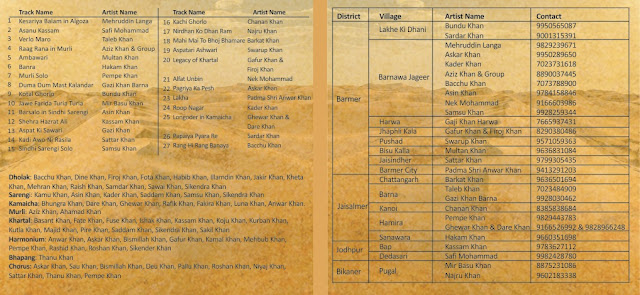
Community development and creation of decent livelihoods through traditional skills of music generated economic resources, social cohesion, and a sense of identity and pride for the musicians. The collective community experience of economic, social and cultural empowerment, national and international exposure, growing performance opportunities and increased appreciation created a shared sense of purpose and value. The previously unknown and marginalized villages transformed into well known musical hubs of talented and respected musicians. This transformation led to a sense of collective well-being, social inclusion, and mutual solidarity.
The foundational principle of banglanatak is creating opportunities and access to resources for all, to ensure that every individual or social group can have the same possibilities and opportunities to fulfil themselves. banglanatak has tried to create a level playing field for the cultural practitioners so that they can grow and realize their full potential in an autonomous way, as well as enjoy human rights and dignity fully. Focused and strategic approaches were undertaken to ensure inclusion of women in the entire development process. https://youtu.be/JcApGhDWdeE
Dominant values and cultures have always existed and pushed against indigenous, and non-mainstream cultures leading to a more conservative and authoritarian society. However, folk music has always been the vehicle of ideas and expressions of pluralism, universal love and celebration of humanity. BNC's work with folk music genres and the rural indigenous musician communities addressed their existing cultural marginalization along with social and economic ostracization. With the aim to promote cultural diversity and pluralism, banglanatak advocated for the vision of cultural democracy through widespread folk performances of the artists at local, national and international platforms, exchange and collaboration with different music genres and folk cultures from around the world, popularising their songs, tunes, instruments through social media and digital tools, and educating the mass audience on the openness, syncretism and richness of these music traditions. Sur Jahan, celebrating diversity, pluralism and openness, was conceived in 2009 and its first edition was organized in 2011 in partnership with various international embassies. The resulting event was unique because it was free for all and it provided an unconditional and unrestrained space for performers, musicians, and audiences to interact with each other, know about respective cultures and musical traditions, jam together and enjoy the diversity and confluence of creativity in one place. https://youtu.be/bvbvJkNc2Rc
I want to participate
ReplyDelete